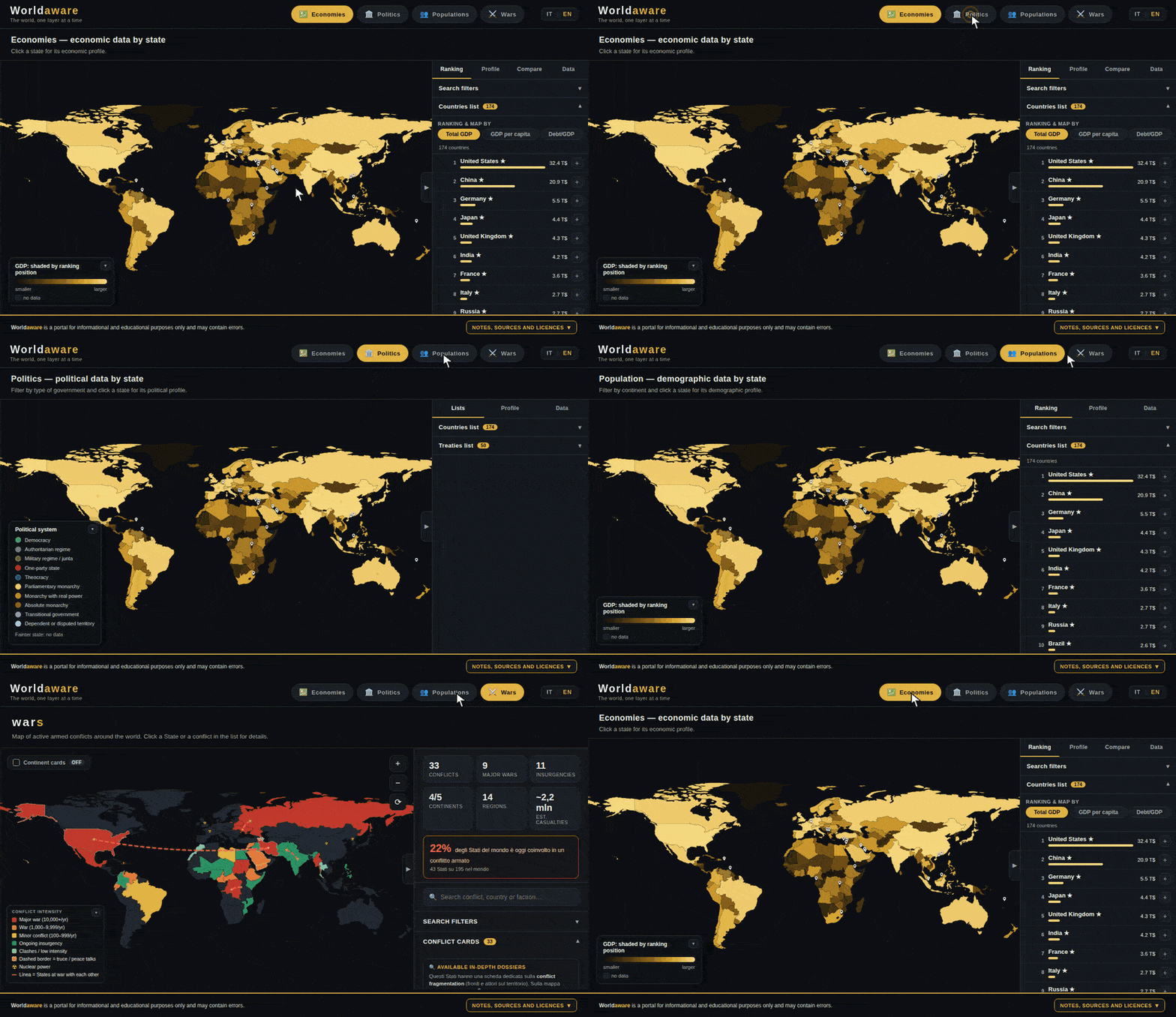
Navigate between the sub-portals
The top bar switches between the four layers: Economies, Politics, Population and Wars. The map recolours and the panel shows the data for the chosen theme.
Worldaware explains the world and its politics to readers who follow wars, the economy and international affairs. One interactive map, four ways to read it: ongoing conflicts, economies, political systems and the populations of every country, with declared sources and regularly updated data.
Not a news feed, but the bigger picture: every figure is tied to a country, a map and its sources.
Each portal is a view of the same map. You can switch view at any time from the top bar.
Ongoing armed conflicts: status, estimated casualties, timeline, actors involved and sources, with focus and in-depth pages.
Explore the wars → 💹Total and per-capita GDP, debt-to-GDP ratio, rankings and two-click country comparisons.
Explore the economies → 🏛️Political systems, heads of state and government, membership of international organisations and treaties.
Explore politics → 👥How many we are and how we change: population, demographics and the make-up of every country.
Explore populations →Switch from conflicts to the economy, from politics to population in one click: the map recolours to show the topic you chose.
Click a country to see the key data for the active topic, linked to its in-depth page.
Put two countries side by side or browse rankings by GDP, income per capita, debt and population.
A printable dossier for every country, downloadable as PDF, with sources cited transparently.
Three gestures to get started. The animations show the interaction live; the full tutorial covers every feature.
The top bar switches between the four layers: Economies, Politics, Population and Wars. The map recolours and the panel shows the data for the chosen theme.
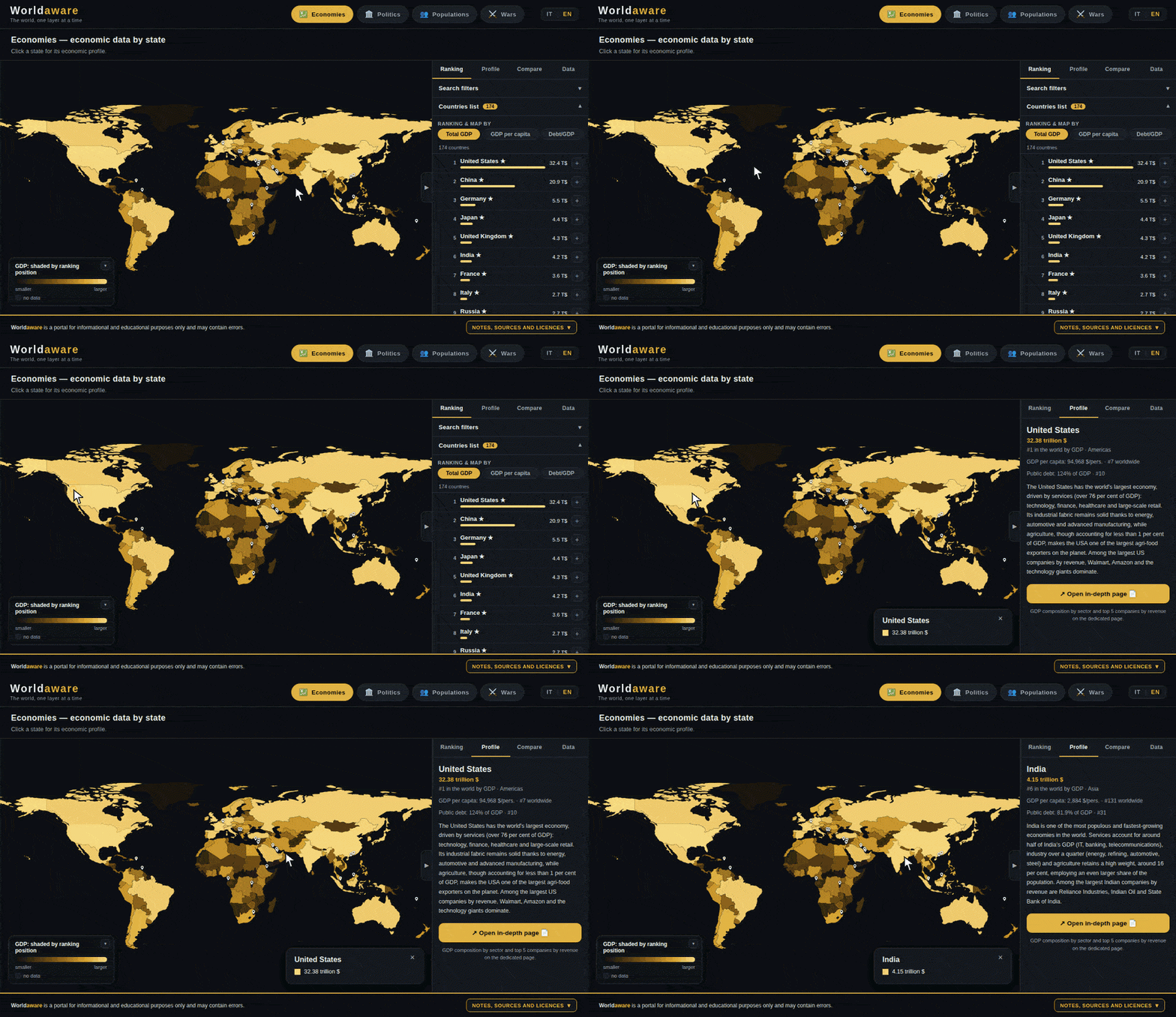
Every country on the map is clickable: a card with the active topic's data opens on the right.
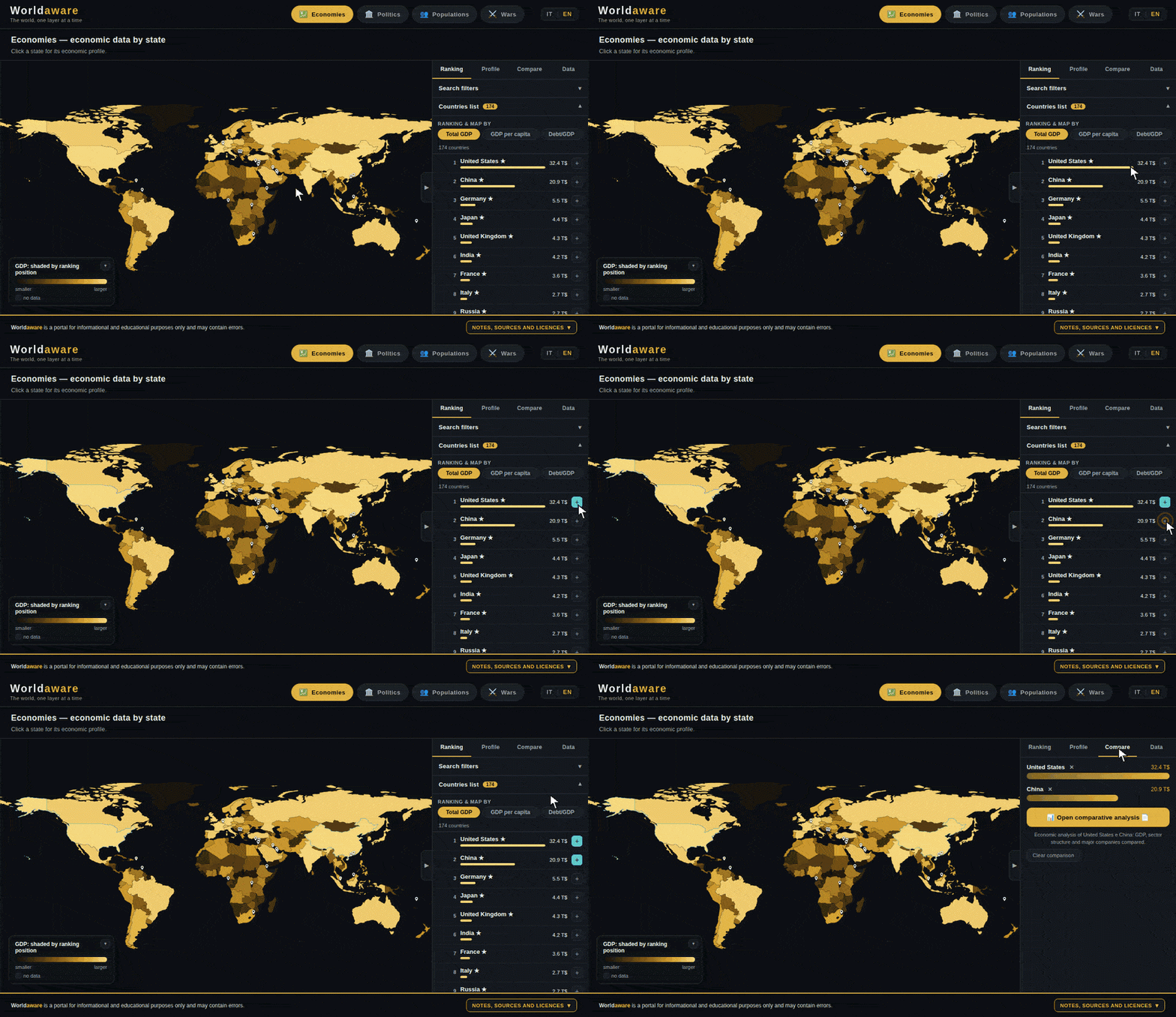
Press “+” next to two countries in the ranking and open the Compare tab.
Worldaware is a project created by Giacomo Domenichelli, who holds a Master's degree in Political Science from the University of Padua, bringing the rigour of political analysis together with the craft of making complex data clear.